

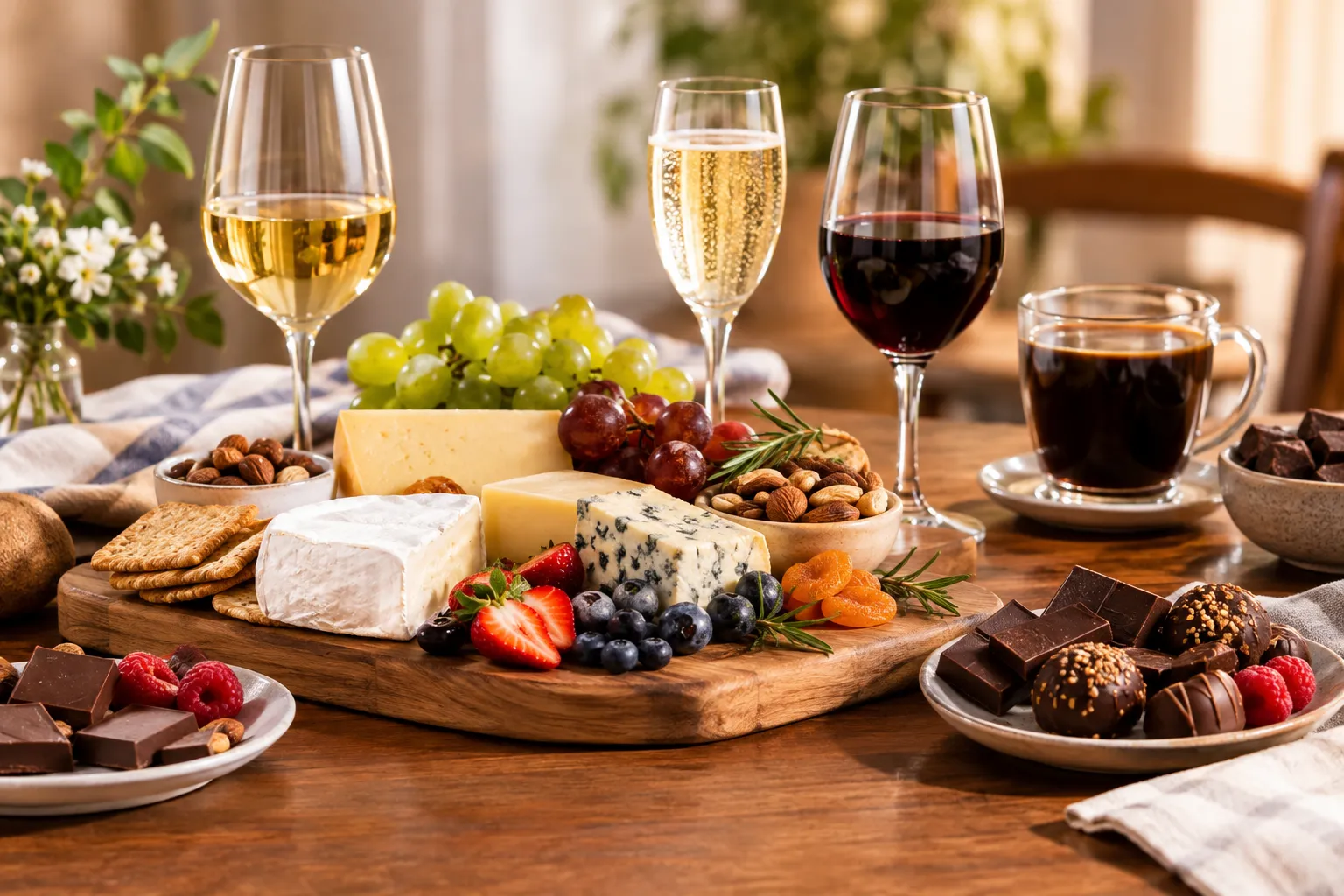
Food and beverages can completely change one another. A crisp drink can refresh the palate after a rich bite, while a creamy cheese can make a dry beverage seem softer and more approachable. The most enjoyable pairings are not necessarily the most expensive or complicated ones. They are combinations where the flavors, textures, sweetness, acidity, and intensity work together.
Whether you’re planning a dinner, preparing a casual tasting board, or putting together a thoughtful food gift, understanding a few basic pairing principles can make the experience more enjoyable. You don’t need to memorize hundreds of rules. Instead, focus on balance and consider how each component interacts with the others.
Start With Balance, Not Rules
Traditional pairing advice can be useful, but treating it as a strict rulebook can make food and beverage selection unnecessarily complicated. A better starting point is balance.
Consider these five characteristics:
- Sweetness: Sweeter foods generally work well with beverages that have enough sweetness to stand alongside them.
- Acidity: Acidic foods and beverages can provide contrast and refresh the palate.
- Body: Rich foods often need a beverage with enough structure to avoid being overwhelmed.
- Intensity: Delicate foods are easily overshadowed by highly concentrated flavors.
- Texture: Creamy, crunchy, fatty, and crisp textures can create interesting contrasts.
For example, a rich cheese may benefit from a beverage with noticeable acidity, while a delicate dessert may pair better with something lighter and sweeter.
The goal isn’t to make every flavor identical. In many cases, contrast is what makes the pairing memorable.
Why Cheese and Beverages Work So Well Together
Cheese is one of the most versatile foods for pairing because there are so many differences in texture, saltiness, richness, and age.
Fresh and Soft Cheeses
Fresh cheeses tend to have mild flavors and creamy or delicate textures. Their subtle character can be complemented by crisp, refreshing beverages rather than something extremely intense.
Examples include:
- Fresh goat cheese with a bright white wine
- Brie with sparkling wine
- Fresh mozzarella with a crisp, light beverage
The acidity in a suitable wine can cut through creaminess and leave the palate feeling refreshed.
Aged and Hard Cheeses
Aged cheeses generally have more concentrated flavors and firmer textures. They can stand up to fuller-bodied beverages.
Aged cheddar, for instance, can work well with a structured red wine, while nutty hard cheeses can complement richer or more developed beverages.
When building a cheese board, variety is useful. Combining mild and aged cheeses gives guests different flavors to explore without making the pairing feel repetitive.
Chocolate Pairings: Think About Sweetness and Intensity
Chocolate introduces a different challenge because sweetness can dominate a pairing. The beverage should have enough character to complement the chocolate without creating an unpleasantly bitter or overly sweet combination.
Dark chocolate tends to have more bitterness and intensity than milk chocolate. This makes it particularly interesting with fuller-bodied red wines or richer dessert beverages.
Milk chocolate is generally softer and sweeter, making it suitable for smoother and fruit-forward options.
White chocolate has a creamy sweetness that can work with lighter, aromatic beverages.
For special occasions, wine and chocolate gift baskets can also illustrate how complementary flavors are brought together. The useful principle is not simply “wine goes with chocolate”; it is matching the intensity and sweetness of both components.
Building a Beverage-Friendly Cheese Board
A cheese board becomes much easier to pair when you build it in stages instead of selecting everything randomly.
Start with two or three cheeses that have noticeably different characteristics. Then add supporting foods that introduce texture and contrast.
Consider Including
- Soft cheese for creaminess
- Aged cheese for stronger savory flavors
- Crackers or toasted bread for crunch
- Fresh or dried fruit for sweetness
- Nuts for texture
- A mild preserve or honey for contrast
Once the food is selected, choose beverages that can interact with several elements on the board.
A crisp white wine may work with fresh cheese and fruit, while a fuller red may be better suited to aged varieties. Sparkling wine can be particularly versatile because its acidity and carbonation can help refresh the palate between richer bites.
For hosts who want a ready-made combination, wine and cheese gift baskets demonstrate another practical approach: pairing a beverage with complementary savory foods rather than treating each item as a separate gift.
Pairing Wine With Common Foods
Wine pairing becomes less intimidating when you start with familiar foods.
Pasta and Tomato-Based Dishes
Tomato-based sauces typically have noticeable acidity, so wines with good acidity can complement them naturally. The preparation also matters. A simple tomato pasta calls for a different approach than a heavily seasoned meat sauce.
Grilled or Roasted Meats
Rich meats can handle beverages with greater body and structure. The cooking method matters too. Grilled foods may introduce smoky or charred notes, while roasted dishes can develop deeper savory flavors.
Instead of focusing only on the meat, consider the entire plate. A steak with a creamy sauce may call for something different from the same steak served with a bright herb-based salad.
Seafood
Many seafood dishes benefit from fresh, crisp pairings. However, there is no single rule for all seafood. A delicate white fish, buttery salmon, spicy shrimp, and grilled tuna have very different flavor profiles.
Sauce and preparation should therefore be considered alongside the main ingredient.
Desserts
Dessert pairing is primarily about managing sweetness. If the food is considerably sweeter than the beverage, the beverage can taste thin or overly sharp.
For this reason, dessert beverages generally need enough sweetness and flavor intensity to remain enjoyable alongside the dish.
Don’t Forget Non-Alcoholic Options
Good pairing isn’t limited to alcoholic beverages. Sparkling water, tea, coffee, fruit-based drinks, and alcohol-free wines can all play an important role at a gathering.
For example, sparkling water can cleanse the palate between rich foods, while black tea can provide a pleasant contrast to sweet desserts. Coffee naturally complements many chocolate-based desserts because its roasted character echoes some of the deeper flavors in cocoa.
Offering both alcoholic and non-alcoholic options also makes a meal more welcoming to guests with different preferences.
How to Create a Pairing for a Gift
Food and beverage pairings can also turn a simple present into a more complete experience. Instead of selecting unrelated products, think about how the recipient might enjoy them together.
A simple formula is:
One beverage + one primary food + one complementary snack
For example:
- Red wine + aged cheese + crackers
- White wine + soft cheese + dried fruit
- Sparkling wine + milk chocolate + nuts
- Dessert wine + dark chocolate + roasted almonds
Packaging can then reinforce the theme. A wooden box, serving board, attractive glassware, or carefully arranged basket can make the presentation feel intentional without adding unnecessary products.
The same principle applies to holiday gifts, birthdays, anniversaries, housewarmings, and corporate occasions. A thoughtful combination often feels more personal than a collection of unrelated items.
Common Pairing Mistakes to Avoid
Even experienced hosts can make pairing mistakes. Fortunately, most are easy to prevent.
Choosing Based Only on Price
An expensive bottle isn’t automatically the right match for a particular dish. Compatibility matters more than price.
Ignoring the Sauce
The main ingredient gets most of the attention, but sauces can completely change a dish. Creamy, spicy, acidic, or sweet sauces should be considered when selecting a beverage.
Pairing Everything With the Same Beverage
One versatile beverage can work with several foods, but serving the same option throughout a multi-course meal can become monotonous. Even a simple change between courses can create more variety.
Overloading the Board
Too many strong cheeses, intensely flavored snacks, and powerful beverages can make everything compete for attention. A few contrasting elements are often more effective.
A Simple Way to Experiment
The easiest way to improve pairing skills is to experiment in small portions. Choose one beverage and three foods with different characteristics. Taste them individually first, then together.
Ask yourself:
- Does the beverage make the food taste more balanced?
- Does one flavor overpower the other?
- Does the combination leave the palate refreshed or heavy?
- Would a sweeter, more acidic, lighter, or fuller-bodied option work better?
There doesn’t have to be one universally correct answer. Personal preference remains an important part of food and beverage pairing.
Frequently Asked Questions
What is the most important rule of food and beverage pairing?
Balance is the most useful starting point. Consider sweetness, acidity, body, intensity, and texture rather than relying on rigid pairing rules.
Does cheese always pair with red wine?
No. Cheese can work with red, white, sparkling, and other beverages. The type of cheese, its age, saltiness, and texture all influence the pairing.
What chocolate works well with wine?
Dark, milk, and white chocolate can all be paired with wine, but the beverage should be selected according to the chocolate’s sweetness and intensity. Dark chocolate generally calls for a pairing that can stand up to its stronger character.
Can non-alcoholic beverages be paired with food?
Absolutely. Sparkling water, tea, coffee, fruit drinks, and alcohol-free wines can all complement different foods. Pairing principles such as acidity, sweetness, texture, and intensity still apply.
Final Thoughts
Successful food and beverage pairing is less about memorizing traditional combinations and more about understanding balance. Think about what is on the plate, how rich or delicate it is, and which flavors need contrast or reinforcement.
Start with familiar foods, experiment with different beverages, and pay attention to how each combination changes the overall experience. Whether you’re preparing a dinner for friends, assembling a tasting board, or choosing a food-focused gift, thoughtful pairing can turn ordinary ingredients into a much more memorable experience.